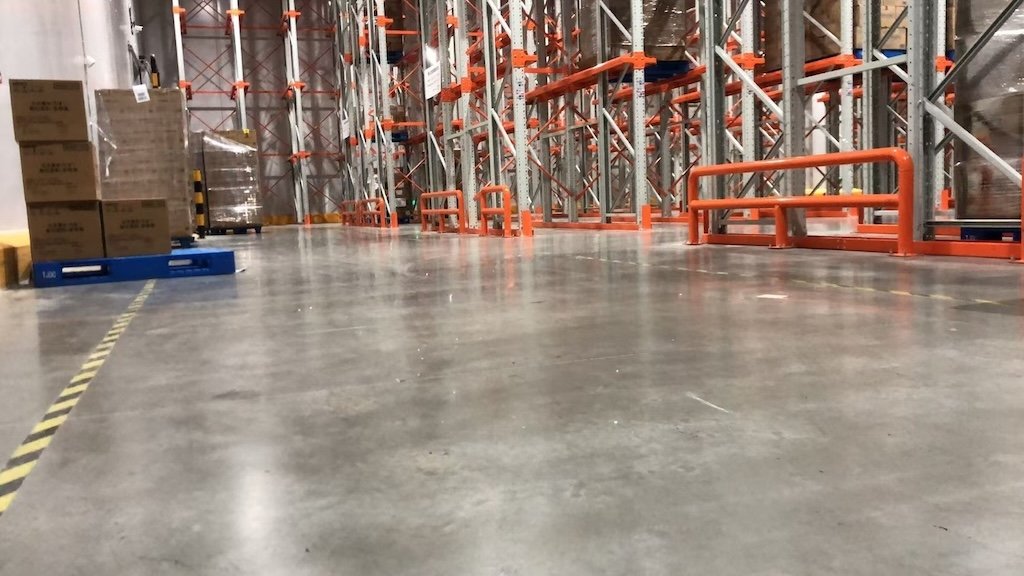
Modern warehouse and logistics centers are designed to handle heavy loads, frequent forklift traffic, and long service life requirements. In many developing regions, industrial floors are exposed to high temperatures, shrinkage stress, and continuous mechanical wear.
Without proper reinforcement, warehouse floors often experience:
Shrinkage cracking
Surface spalling
Joint failure
Uneven settlement
High maintenance cost
Traditional reinforcement methods such as steel mesh or steel fiber can provide structural strength, but they also introduce challenges related to corrosion, handling safety, and installation time.
As a result, macro synthetic fiber reinforcement is increasingly used as a reliable alternative for industrial floor construction.
2. Typical Problems in Traditional Steel Reinforcement
Based on common construction practice, steel reinforcement systems often face the following issues:
Steel Mesh
Requires manual installation
Time-consuming
Labor-intensive
Risk of incorrect positioning
Steel Fiber
Heavy material handling
Risk of corrosion
Higher transportation cost
Safety concerns during mixing
These factors directly increase project cost and construction time.
3. How My Macro Synthetic Fiber Solves These Problems
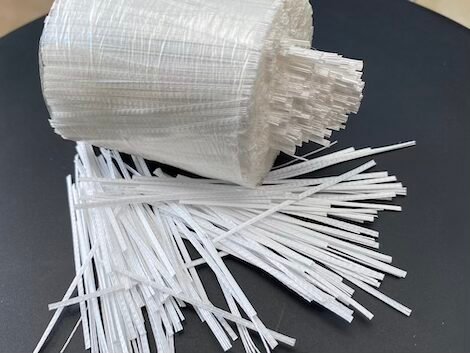
Macro synthetic fiber made from modified polypropylene provides structural reinforcement by distributing stress throughout the concrete matrix.
This type of fiber is specifically designed to:
Control cracking
Improve load-bearing capacity
Replace steel mesh in many floor applications
Improve durability in humid environments
Most importantly, it simplifies the construction process.
4. Recommended Fiber Specification
Fiber Type
multi-strande 58
Length
58 mm
Material
Polypropylene and polyethylene mixture
Tensile Strength
≥ 600 MPa
Elastic Modulus
≥ 11 GPa
Melting Point
160 – 170°C
Density
0.91 g/cm³
5. Recommended Dosage for Warehouse Floor Concrete
Typical dosage:
Standard Industrial Floor
2 – 3 kg per cubic meter
Heavy Load Warehouse
3 – 6 kg per cubic meter
High Traffic Logistics Center
5 – 7 kg per cubic meter
Actual dosage depends on:
Slab thickness
Load requirement
Subgrade condition
Joint spacing
6. Mixing Method
Correct mixing is essential to ensure uniform fiber distribution.
Recommended Mixing Procedure
Step 1
Add aggregates and cement into the mixer
Step 2
Start the mixer
Step 3
Add fiber gradually
Step 4
Mix for:
30 – 60 seconds
Step 5
Add water and admixture
Step 6
Continue mixing:
60 – 90 seconds
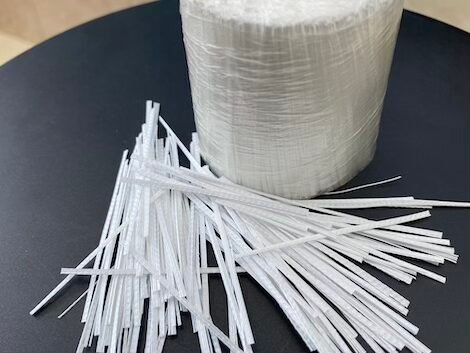
This packaging helps prevent fiber clumping and improves dispersion efficiency.
7. Performance Benefits for Warehouse Floors
Using macro synthetic fiber reinforcement provides measurable performance improvements.