Modified Hydrophilic Macro Synthetic Fiber
ConChip High-Strength Modified Macro Synthetic Fiber
Engineered with polar molecular modification to improve bonding, dispersion, and structural performance in concrete reinforcement.
- Hydrophilic surface enhances the bond between fibers and concrete.
- Improves crack control and toughness.
- Can serve as a reliable alternative to traditional steel fibers and reinforcing mesh.
Why are they different?
Common problems of synthetic fibers
In concrete, the fibers don't break, but rather are easily pulled out. We need to delay the fiber extraction process.
Material facts
Material Limitation Conventional PP fibers are hydrophobic and have limited bonding with cement matrix..
Engineering consequences
Engineering Consequence Weak interfacial bonding reduces crack control efficiency and structural contribution.
How do we solve this?
ConChip Solution Polar molecular modification improves hydrophilicity and bonding performance.
This is the heading
This is the heading
| Comparison Items | Tensile Strength | Corrosion Resistance | Beam Test: Re3 | Slab Test: Energy Absorption | Interfacial Force | Construction Safety | Total Life Cycle Cost | Long-term Maintenance | Service Life | carbon footprint(CO2) |
|---|---|---|---|---|---|---|---|---|---|---|
| ConChip | 600-700Mpa | Excellent: 100% Acid & Alkali Resistant | Superior: Structural Reinforcement | >450J (Very High: >450J | Strong: Patented Embossing & Hydrophilic | High: Safe for Workers & Equipment | Minimal: Logistics & Maintenance Savings | Zero: No Spalling or Rust | 50-100 Years: Matches Concrete Life | Low environmental friendliness |
| Steel Fiber | 1000-1200Mpa | Poor: Prone to Rusting | Good | Good: Risk of Brittle Fracture | Medium: Hooked-end Only | Low: Risk of Injury & Pipe Wear | High: Heavy Weight & High Maintenance | High: Requires Patching of Rust Spots | Uncertain: Depends on Corrosion | High production energy consumption |
| ordinary synthetic fibers | 300-450Mpa | Good | None: Crack Control Only | Very Low | Weak | High | Low: No Structural Benefit | Very Low | Average | Low environmental friendliness |
ConChip® High-Performance Fiber Series
Engineered for superior reinforcement, durability, and structural integrity.
| Performance | High strength 48 | twist wave 50 | multi-strand 58 | Modified PP 12 | Transparent structure 45 | Monofilament 19 | Recycled material 44 |
|---|---|---|---|---|---|---|---|
| tensile strength | ≥600Mpa | ≥600Mpa | ≥600Mpa | ≥600Mpa | ≥500Mpa | ≥600Mpa | ≥500Mpa |
| elastic modulus | ≥11Gpa | ≥11Gpa | ≥11Gpa | ≥11Gpa | ≥6Gpa | ≥7Gpa | ≥6Gpa |
| Elongation at break | ≤20 | ≤30 | ≤30 | ≤30 | ≤30 | ≤40 | ≤30 |
| Core materials | polypropylene | polyolefin | polyolefin | Modified PP | polypropylene | polypropylene | Polypropylene recycled materials |
| Dispersion | good | good | good | Good | Good | Good | Good |
| Impact resistance ratio | 3.6 | 3.6 | 3.5 | 3.6 | 3.3 | 3.1 | 3.0 |
| Common length | 48mm | 50mm | 58mm | 12mm | 45mm | 19mm | 44mm |
| Most suitable for | Structural concrete, precast components, floor slabs, paving | Precast components, Shotcrete | Precast components, industrial flooring, paving | UHPC components | Flooring, concrete components | Mortar, wall | residential housing |
Applications in concrete
Designed for demanding structural and infrastructure concrete projects.
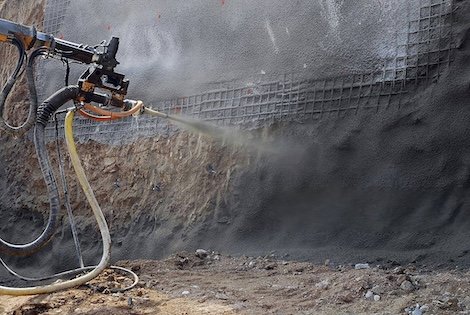
Shotcrete Support
- Low Rebound
- Good pumpability
- Energy Absorption
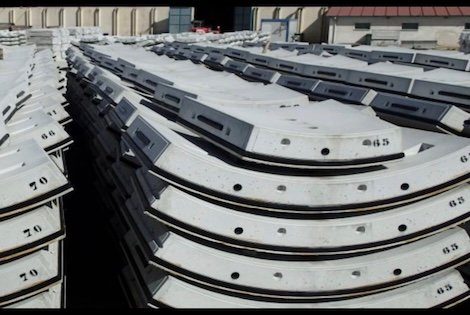
Tunnel Linings
- Corrosion Resistance & Durability
- Energy Absorption / Toughness
- Energy Absorption / Toughness

Industrial Floors
- Crack Control
- Surface Finish & No Poking
- Speed & Cost Efficiency
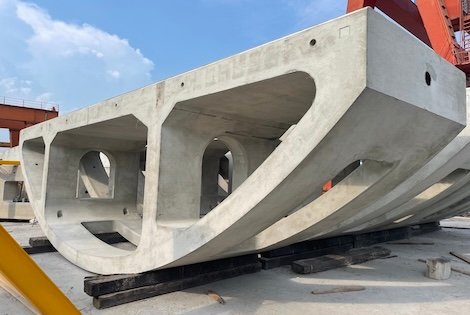
Precast Concrete
- Reducing Demoulding Damage
- Surface Aesthetics & Long-term Durability
- Replacing Light Steel Mesh
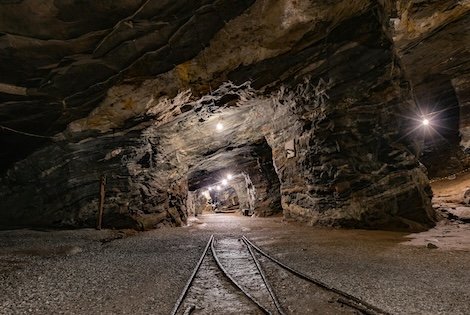
Mining Ground Support
- Energy Absorption / Toughness
- Acid & Corrosion Resistance
- Rebound & Cycle Time
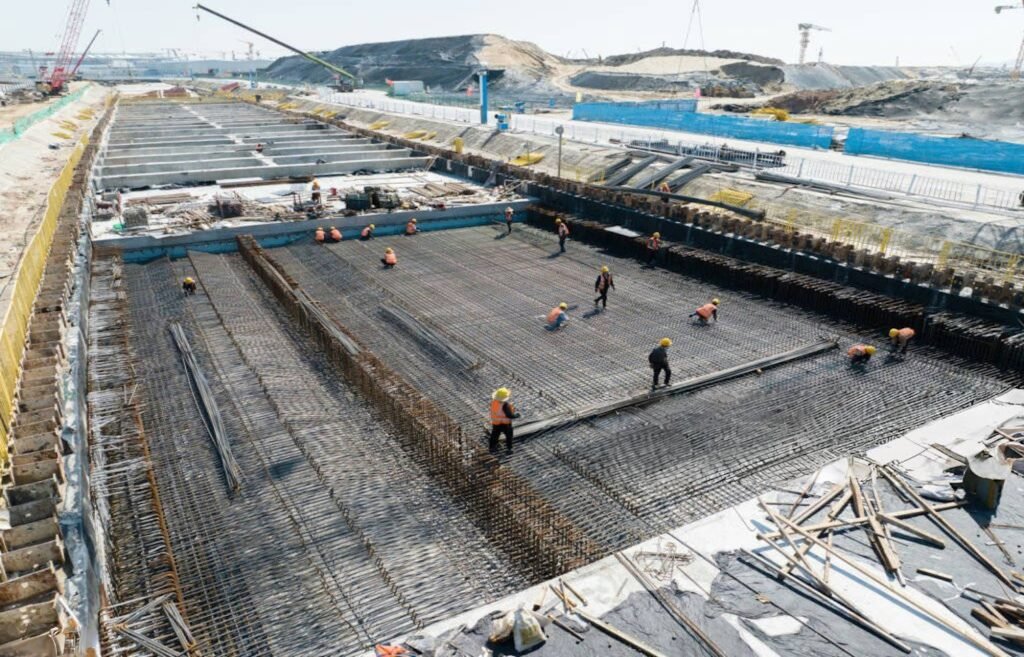
Infrastructure Concrete
- Monolithic Integrity & Seismic Resilience)
- Fatigue Resistance under Dynamic Loads
- Chemical Resistance in Harsh Environments
- Carbon Footprint & Green Infrastructure
Tested in Large-Scale Infrastructure Projects
Developed and tested in one of the world's most demanding infrastructure markets.
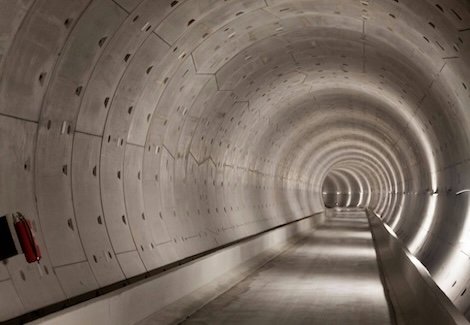
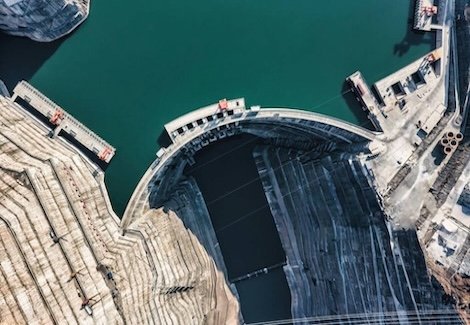

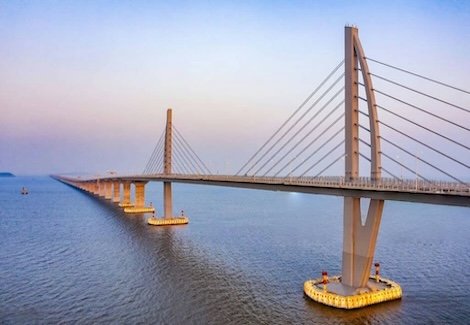
Proven in Demanding Infrastructure Environments
China’s infrastructure projects represent some of the most demanding construction environments in the world. Large-scale tunneling, underground engineering, and mining operations require reliable concrete reinforcement solutions.
Tested in large-scale tunneling and underground construction Suitable for demanding shotcrete and structural concrete environments
Proven performance in high-intensity infrastructure projects
Engineering Testing & Technical Support
Performance validation and engineering support for structural fiber applications.
Performance validated through standardized structural and shotcrete testing.
Beam Bending Test Residual Strength Test
Validated through beam bending tests to evaluate residual strength and structural reinforcement performance.
Shotcrete Panel Test Energy Absorption Test
Panel tests are conducted to evaluate crack control and energy absorption in shotcrete applications.
Mix Design Support
Technical guidance for fiber dosage and integration into different concrete mix designs.
Application Guidance
Support for concrete mixing, pumping, and on-site fiber application.
You ask, I answer
What exactly is ConChip Macro Synthetic Fiber and how does it work?
ConChip is a structural-grade polymer reinforcement. Unlike micro-fibers used for surface cracking, our Macro fibers create a 3D reinforcement network inside the concrete. It acts as a “bridge” across cracks, providing post-crack load capacity and transforming brittle concrete into a ductile, resilient material.
Can ConChip truly replace steel mesh or steel fibers in my project?
Absolutely. For industrial floors, shotcrete, and precast elements, ConChip is a direct structural substitute. It offers equivalent performance to steel (based on ASTM C1609 standards) but with 100% corrosion resistance and zero maintenance costs, significantly reducing the project’s total life cycle cost.
How does ConChip affect the concrete mixing and pumping process?
Our fibers feature a patented hydrophilic coating. This ensures they disperse evenly within seconds without “balling.” Because they are non-abrasive and lightweight, they actually reduce wear on your pumps and hoses compared to steel fibers, leading to faster construction and lower equipment maintenance.
How do I calculate the specific dosage required to meet structural loads?
We don’t guess; we calculate. Based on your project’s F-number, slab thickness, and loading requirements, our engineering team provides a detailed dosage design report. We use international standards like EN 14651 to ensure you use exactly what is needed for structural integrity—no more, no less.
What makes ConChip's "Interfacial Bond" superior to other synthetic fibers?
The secret lies in our Double-Anchorage technology: A combination of patented surface embossing and molecular modification. While competitors rely solely on friction, ConChip creates a chemical and mechanical lock with the cement matrix, preventing “fiber pull-out” and ensuring maximum residual tensile strength.
What is the fire safety and long-term durability of ConChip in tunnels?
ConChip is engineered for extreme environments. It is 100% alkali-proof and won’t degrade in acidic groundwater. Furthermore, our High-Strength series provides a 2-hour fire rating, creating micro-channels during heat exposure to prevent concrete explosive spalling—a critical safety advantage for tunnel and underground infrastructure.